

A Route Can Look Fine Until the Truck Is Already Committed
Heavy hauling can be a straightforward affair. Until it’s not. One simple reason for that is, it rarely gets difficult on the straight, open stretch of interstate. It gets difficult in the last few miles, where road edges, turns, traffic, and weather start to matter. A soft shoulder after a hard North Alabama rain can change the whole move. That is the kind of detail that can turn I-65 heavy transport from routine to frustrating. Because any route can look fine on paper until 80,000 pounds start leaning toward the edge of wet gravel near a county road. That’s why haul planning usually works better when somebody involved has actually driven the roads recently.
The Map Misses the Small Stuff
GPS is useful, but it does not tell you everything. It may show a road as open, but it will not always show low limbs, soft shoulders, railroad crossings with a sharp crown, or a fuel stop that is too tight for a long trailer.
Just one of the reasons we need to pay attention to things like:
- Bridge work near ramps
- Narrow two-lane roads
- School traffic around 7:15 a.m.
- Gravel lots after hard rain
- Steep drive entrances at shops and yards
Timing Can Change the Whole Move
Some loads move better early. Some do not. Around shift change, a road near a plant or warehouse can very quickly stack up, and a wide load sitting halfway through a turn is a bad way to find that out.
This is where I-65 heavy transport planning needs local input. A route that works at 10 a.m. may be a mess at 7:30, especially near Florence, Muscle Shoals, Tuscumbia, or the roads feeding back toward the interstate.
Local Roads Have Local Habits
We know which stretches collect standing water after a storm and which intersections get crowded when school lets out. That kind of information needs to be factored into a basic route plan. We also know which shoulders look solid until a loaded trailer gets close to the edge. A road can feel wide enough in a pickup and feel completely different with a heavy haul behind the cab.
For I-65 heavy transport, those details are important to move the load safely from A to B. A driver may have the right permit and the right truck, but one tight turn near a service road can still slow the whole job down. Sometimes the better move is waiting ten minutes for traffic to clear instead of forcing a turn. Other times it means using a longer route because the shorter one has a bad dip, low limbs, or no clean place to pull off.
Heavy Haul Problems Usually Start Small
A low shoulder. A missed turn. A driveway that drops off harder than expected. Most heavy haul problems we see do not start as big disasters.
With I-65 heavy transport, we like to look at the boring details first. Where can the truck stage? Where can it turn around? Where will traffic pile up if something takes 20 minutes longer than planned?er state usually involves at least one phone call to a partner carrier in the destination region.
Randy’s Towing Brings Local Road Sense to I-65 Heavy Transport
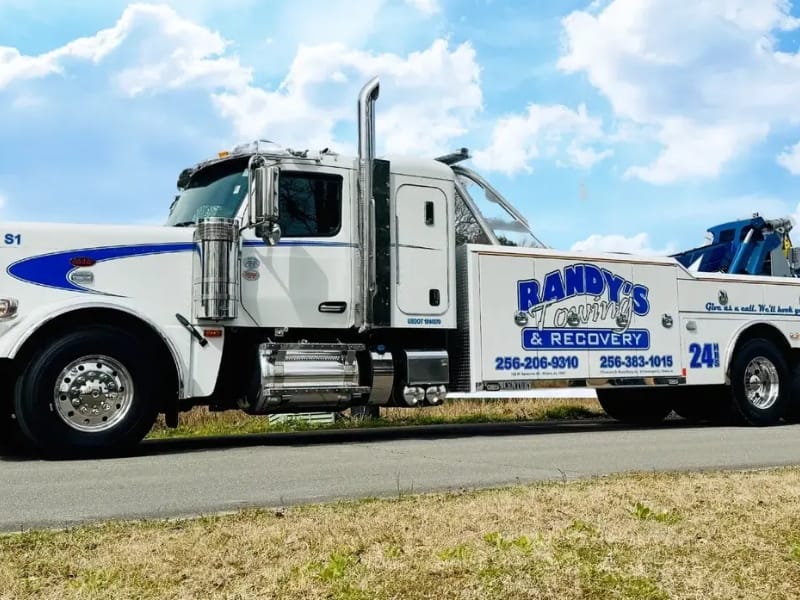
At Randy’s Towing, we handle towing, recovery, equipment moves, and heavy-duty calls around the Shoals area. I-65 heavy transport fits right into that work because the interstate is only part of the trip. The tricky part often starts after the exit, where a wide load has to deal with narrow entrances, parked cars, and soft ground.
We see I-65 heavy transport issues near ramps, service roads, industrial yards, and rural cut-throughs. Good planning comes from knowing where the pavement narrows, where rain leaves mud, and where one bad turn can hold up traffic longer than anybody wants.
FAQs
Why does route familiarity matter for a heavy load?
A familiar route helps the operator plan around turns, grades, traffic patterns, and tight access points. It also helps reduce last-minute surprises once the load is already moving.
What should I tell dispatch before scheduling a large transport?
Share the weight, dimensions, pickup location, delivery location, deadline, and any access issues. Photos of the equipment and site can also help the carrier plan the right truck and route.
Can weather change a planned transport route?
Yes. Heavy rain, high winds, fog, or icy roads can affect timing, escort needs, and route choice. A good plan leaves room to adjust before the load is on the road.
Why do some heavy loads need escorts?
Escorts help manage traffic, warn other drivers, and guide the operator through turns, narrow roads, and intersections. They are often required when a load is oversized or difficult to maneuver.
What can delay a heavy transport job?
Delays can come from permit restrictions, traffic, construction, weather, equipment access, or loading problems. Even a small site issue can affect the schedule if the truck cannot position correctly.
How far in advance should I schedule heavy equipment transport?
Schedule as early as possible, especially for oversized or overweight loads. More lead time gives the carrier room to check permits, plan the route, and coordinate support.