A Bus Load Full of Trouble
A bus with an engine problem may still roll, steer, and sit normally on its suspension. And a bus involved in a collision might have an entirely different set of problems before towing can even begin. With I-65 bus towing, understanding what still works is an important part of deciding how the vehicle can be prepared and moved.
The size of the bus matters, but its mechanical condition can have just as much influence on the job.
Start With What Still Rolls and Steers
A large passenger vehicle depends on more than its engine to move properly. Steering, suspension, wheels, tires, brakes, and axles all affect whether it can roll behind a tow truck.
That creates an important distinction between a bus that simply will not start and one that cannot move normally. A damaged wheel or suspension component can turn what initially looks like a towing job into a recovery problem.
Crews need to know which parts of the bus can still perform their normal functions before relying on them during transportation.
Bus Type Changes the Mechanical Picture
School buses, motorcoaches, transit buses, and shuttles can differ considerably beneath the body. Axle arrangements and drivetrain configurations vary, as do wheelbase, ground clearance, and overhang.
Those differences matter when determining which wheels will remain on the roadway and what preparation may be necessary before towing. Two buses of similar overall size are not necessarily mechanically alike.
This is why identifying the type and configuration of the disabled bus is more useful than treating “bus” as a single heavy-duty category.
A Bus May Need Recovery Before It Needs Towing
Collision damage can leave a bus with wheels that no longer point or roll normally. A bus can also leave the roadway or stop in a position where a towing connection cannot immediately be made.
In those situations, bus recovery along I-65 can become the first stage of the job. The immediate goal is getting the vehicle into a suitable position for transportation.
Crews may need to consider:
- Steering and suspension condition
- Wheel and tire damage
- Axle and drivetrain configuration
- Overall length and wheelbase
- Front and rear overhang
- Ground and underbody clearance
- The position of the bus at the scene
Only after those factors are understood can heavy bus towing near I-65 move into the transportation stage.
Lifting the Bus Changes Its Clearance
Once one end of a bus is raised, the body no longer sits at its normal angle. On a long vehicle, that change can be noticeable at the opposite end.
The rear overhang may move closer to the pavement, while components beneath the body can have different clearance than they did before hookup. During commercial bus towing on I-65, those changes continue to matter as the bus travels over pavement transitions and through turns.
The towing connection may be at one end, but the whole vehicle has to make the trip.
Passengers Create a Separate Transportation Need
If the disabled bus was carrying passengers, arrangements for them are separate from moving the equipment. The appropriate parties may need another bus or another form of transportation.
Once passengers have been addressed, bus towing in the I-65 corridor can focus on the vehicle itself. An empty bus still has the same mechanical failure, dimensions, drivetrain, and possible damage that caused the towing problem in the first place.
The Reason the Bus Stopped Matters
An engine failure, steering problem, damaged wheel, collision, and off-road incident can all leave a bus unable to continue, but they do not create identical towing jobs.
With heavy-duty bus recovery near I-65, the condition that disabled the bus helps determine what has to happen before it moves. A bus that rolls freely may require preparation for transport, while one with damaged running gear may require additional recovery work first.
That distinction keeps the focus on the actual condition of the vehicle rather than its size alone.
Randy’s Towing & Recovery for I-65 Bus Towing
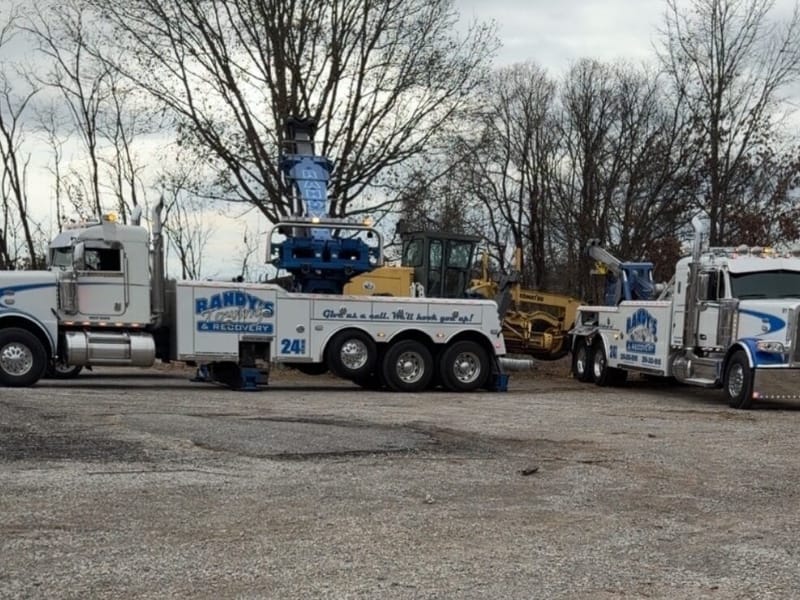
Randy’s Towing & Recovery serves North Alabama, including Athens, Florence, and Muscle Shoals. A disabled bus can combine the size of a heavy commercial vehicle with mechanical and dimensional considerations that are specific to passenger equipment.
For heavy bus towing along I-65, the process can involve assessing wheels, steering, suspension, drivetrain, clearance, and the position of the vehicle before transportation begins. I-65 bus towing starts with determining what the bus can still do mechanically, because that condition shapes everything that follows.
FAQs
Can a bus be towed if it has a damaged wheel?
It may be possible, but the wheel damage has to be considered before movement. A bus that cannot roll normally may require recovery or additional preparation first.
Why is steering condition important when towing a bus?
The bus needs to track correctly while being moved. Damaged steering can affect how it is positioned and prepared for transportation.
Are school buses and motorcoaches mechanically similar?
Not necessarily. They can have different drivetrains, axle arrangements, wheelbases, suspension designs, and body dimensions.
What happens if a bus leaves the roadway?
Its position may require recovery before towing can begin. Once it is accessible, its mechanical condition can be assessed for transportation.
Does removing passengers make a bus easier to tow?
It addresses the passenger transportation issue, but the bus still has the same dimensions and mechanical condition. The vehicle itself must still be prepared appropriately.
Why does rear clearance matter during a bus tow?
Raising one end changes the angle of the body. On a long bus, that can reduce clearance beneath the rear overhang or other low-mounted components.