The First Sign Is Usually the Last Warning
Jackknifing is tricky. Drivers can usually feel the trailer start pushing before they touch the brakes. Environment often doesn’t help here either: the road is damp, the trailer running light, and by the time drivers correct the steering, the whole rig already folded sideways across two lanes. That kind of call is where I-65 semi towing usually starts: traffic stacked behind a sideways truck, flashers going, and a driver trying to figure out what just went wrong.
A jackknife does not always announce itself. The tractor and trailer stop tracking together, the drive wheels slip or lock, and the trailer swings out faster than most drivers expect. Weight plays a role, but it is not the only factor. We have pulled loaded trucks out of ditches and seen empty trailers fold on flat pavement.
Where the Problem Usually Begins
Most jackknifes start with a combination of speed, braking pressure, and road conditions. A wet highway after weeks of dry weather can leave oil sitting on the surface. Bridge decks through the Shoals freeze before the rest of the road looks bad. A driver who brakes hard coming into a curve may lose the rear tires before the trailer settles.
Trailer brakes add another layer. If they grab unevenly or too hard, the trailer can start moving sideways on its own. Empty trailers are worse than most drivers think because there is not enough weight holding the tires to the pavement. One sharp correction can finish what uneven braking started.
The Highway Gives Clues Before It Happens
We see patterns in where drivers lose control. Exit ramps, downhill turns, work zones, overpasses, and long sweeping bends create more risk than straight highway. The danger builds before the driver feels anything slide. The prevention steps still sound basic because they work. Slow down before the turn, not halfway through it. Leave more space in rain or fog. Do not steer hard and brake hard at the same time. If the trailer starts to drift, small adjustments beat overcorrection every time.
Brake Balance and Load Placement Make a Difference
After a jackknife, we hear the same story more than once: the driver touched the brakes, the trailer moved, and then the rig was sideways before there was time to react. That does not always mean the driver made a mistake. Sometimes the load, the brakes, the grade, and the weather all line up wrong at the same time.
Load placement matters more than some drivers realize. Heavy freight too far back makes the trailer feel loose. A light trailer can bounce and slide in wet conditions. Drivers who know how their vehicle feels at slow speed usually catch warning signs earlier when they are moving faster.
The Boring Habits Prevent Most Jackknifes
For drivers trying to avoid a towing after folding their rig, the simple habits help the most. Check brake feel before hitting the highway. Give exit ramps more room than they seem to need. Slow down before traffic stacks up, especially in rain, morning frost, or fog rolling through the Tennessee Valley.
A short mental checklist helps:
- Reduce speed before curves and ramps
- Leave extra room on wet or cold pavement
- Avoid sudden steering while braking
- Watch bridge decks and shaded stretches
- Keep trailer brakes adjusted and balanced
- Report brake pull or grab before it gets worse
We would rather talk to a driver at a fuel stop about a brake problem than recover a sideways rig from a median later. I-65 semi towing after a jackknife can mean lane closures, cargo inspections, damaged suspension, and a long wait for traffic to move again.
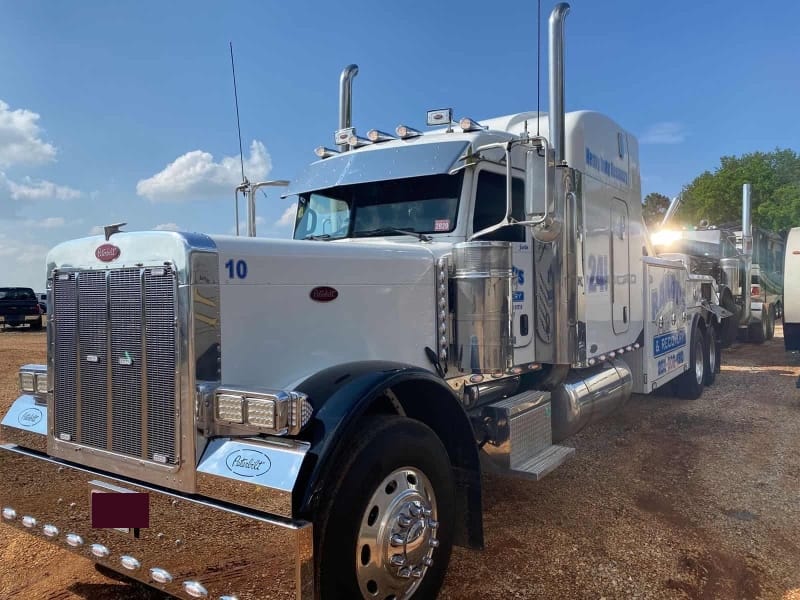
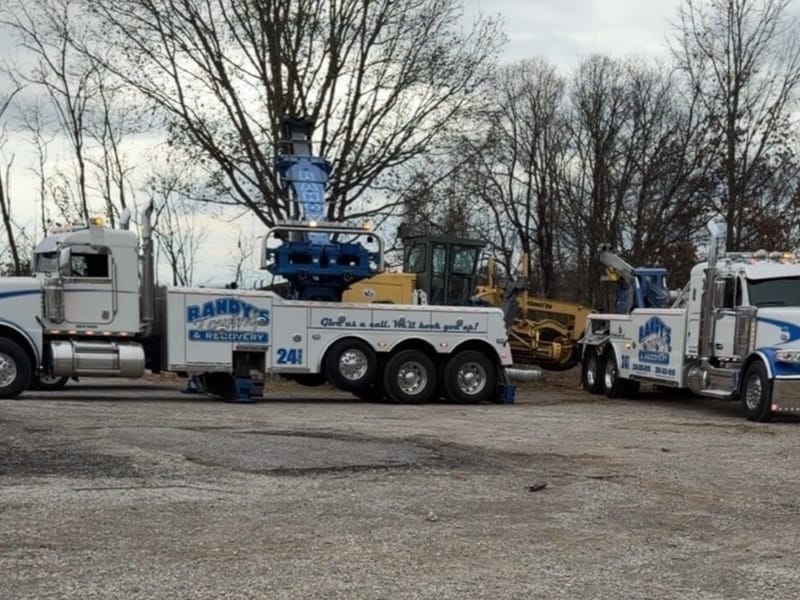
Randy’s Towing & Recovery Handles I-65 Semi Towing After Jackknife Incidents
Randy’s Towing & Recovery started as a family operation in 2008 when Justin and his dad began rolling out on calls together. Justin grew up riding in 18-wheelers with his granddad and working weekend shifts in the wrecker with his dad, so our crew knows what it takes to handle heavy recovery work. Today, we serve drivers across the Shoals, including Muscle Shoals, Florence, Sheffield, Tuscumbia, Athens, Ardmore, Tanner, Huntsville, and Madison.
Our I-65 semi towing work covers more than moving a tractor out of the way. A jackknife may need recovery, inspection, load assistance, or repair support once the truck is back under control. Our crew handles light duty towing, medium duty towing, heavy duty towing, rotator work, bridge jobs, and tight spots. We work with the Alabama State Police, local police departments in Athens, Muscle Shoals, Florence, and Sheffield, and the Limestone and Colbert County Sheriff’s Offices on highway incidents, rural recoveries, and commercial calls. On I-65 semi towing jobs through the Shoals, the weather, hills, and traffic can shift quickly, which is why the first good decision often happens miles before the truck ever starts to slide.
FAQs
What is a jackknife in a semi truck?
A jackknife happens when the tractor and trailer fold toward each other instead of tracking in a straight line. It usually starts when tires lose grip during braking, turning, or slick road conditions.
What should a driver do if the trailer starts to swing?
Stay calm and avoid jerking the wheel. Sudden braking or sharp steering can make the slide worse. Small corrections give the rig a better chance to straighten out.
Can engine braking cause a jackknife?
It can, especially on slick roads. Strong engine braking may slow the drive wheels too quickly and reduce traction. Drivers should use it carefully in rain, ice, or downhill traffic.
Why do empty trailers slide more easily?
Empty trailers have less weight pressing the tires into the pavement. That can make them bounce, skid, or swing faster during hard braking or quick steering.
How often should trailer brakes be checked?
Drivers should check brake feel during pre-trip inspections and pay attention to pulling, grabbing, or uneven braking. Any change should be reported before the truck gets back on the highway.
What damage can happen after a jackknife?
A jackknife can damage suspension, tires, landing gear, air lines, fairings, and cargo. It can also twist the tractor and trailer enough to require recovery instead of a simple tow.